Genlin Universe Astronomy Research Centre

February 6, 2021
The research team began investigations into cosmic astronomy.
June 6, 2022
The research team began writing research papers on related subjects.
September 26, 2024
"Dark Hole -- Genlin on New Peace": in Genlin's book he pioneered the study on Dark Hole
October 17, 2025
Peng Hongling (pen name: Xuanling ), a First- and Second-Term Honorary Trustee and Visiting Professor at Shanghai University, founded the “Xuanling Center for Cosmic Astronomy Research” in Hong Kong.
November 5, 2025
Paper Titled “The Xuan Dong Hypothesis: Energy Information and Distribution Layer Models Inside Black Holes” Completed
December 2, 2025
Paper “Energy-Information Transfer in Horizon-Sized Black Hole Spacetime” Completed
February 26, 2026
Paper Completed: “Circulation-Driven PeV Particle Acceleration—A Non-Singular Internal Model of the ‘Lasso’ Anomaly”
April 8, 2026
"Folding Deep Space—Kepler-22b, a 73,000-times-the-speed-of-light Event Horizon, and the Theory of Interstellar Tunneling" Paper Completed
July 21, 2026
Paper on "Thermodynamic Imprints and Information-Theoretic Constraints of Extraterrestrial Civilizations" Completed

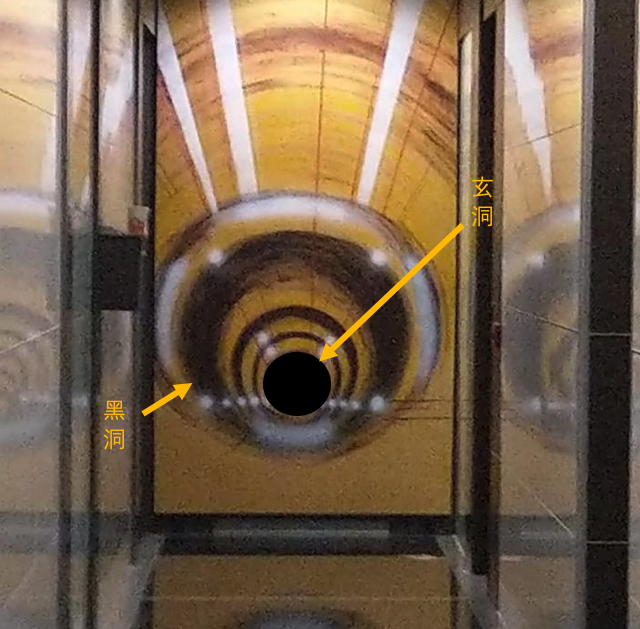
Black Hole Dark Hole
Black Hole Exploration: The central goal of black hole research is to gain a deeper understanding of the physical laws governing extreme gravitational environments, particularly at the critical interface between general relativity and quantum mechanics.Major research areas include: investigating the mechanisms of black hole formation, evolution, and mergers, as well as their profound impact on galactic structure and cosmic evolution; simultaneously, the research focuses on key theoretical issues such as information paradoxes, the nature of singularities, and Hawking radiation, seeking to elucidate the physical essence of information conservation and loss within a unified framework of quantum mechanics and general relativity, thereby advancing the development of a more complete theory of quantum gravity.
The Black Hole Hypothesis: The conservation of energy-information covariance serves as the core theoretical foundation of the “Black Hole Hypothesis,” referred to simply as the “Energy-Information Unification Theory.” This study focuses on the fundamental physical properties of black holes, analyzing their curvature structures and internal dynamical mechanisms through theoretical models and mathematical frameworks, and further exploring their thermodynamic behavior—including the temperature of Hawking radiation, the entropy increase process at the event horizon, and the principles governing the exchange of energy and information.The empirical research centers on the “theoretical prediction—observational verification” approach, with a particular emphasis on the perturbative stability and radiation effects of black holes. At the same time, numerical simulations are used to investigate the impact of external perturbations on the structure of spacetime, with the aim of revealing the gravitational nature of black holes and the energy-information unification mechanism from both theoretical and observational perspectives.
Habitable Planets
Kepler-22 System
Assessment of Habitable Planets: The exploration of potentially habitable worlds involves analyzing planetary atmospheres through spectroscopic observation to detect gases associated with life—such as carbon dioxide, methane, and water vapor—and determining whether conditions allow for liquid water. Transit data and follow-up observations are then used to calculate planetary size, mass, and orbital characteristics to evaluate habitability.
Star–Planet Interaction Research includes: Observing atmospheric spectra to study greenhouse effects and climate patterns; Assessing surface environmental conditions; and Monitoring system stability and identifying additional exoplanets. These studies aim to deepen understanding of the formation and evolution of planetary systems similar to our own and to evaluate the potential habitability of Kepler-22b.
Kepler-22b (in the Kepler-22 system) is a planet recognized by global scientists as the most suitable for human habitation. Its core parameters include a stable average surface temperature of 22 degrees Celsius, and its host star system possesses a star similar to the Sun, abundant water sources, and sufficient oxygen, making it the perfect "New Earth."
Kepler-22b represents the ultimate prospect for exploring a permanent home and the mysteries of time and space for humanity's eternal existence.
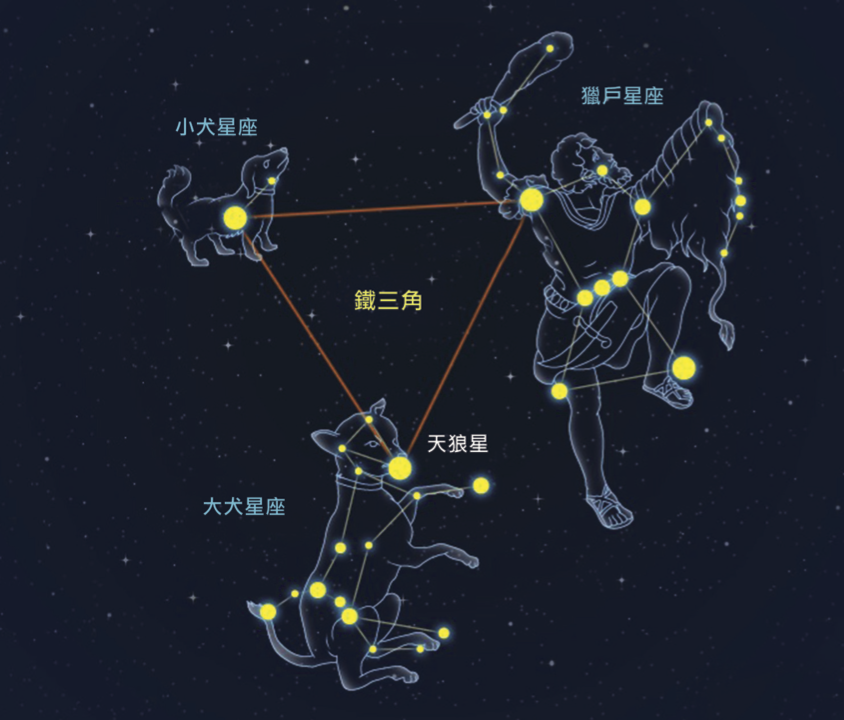
Canis Major Canis Minor Orion Sirius
Orion Sirius
Celestial phenomena offer profound insights into human behavior. Humans, animals, and the environment form an interconnected unity, and the concept of harmony between humanity and nature reflects an essential natural law. The constellations Orion, Canis Major, and Canis Minor are seen as symbolic representations of this bond, particularly illustrating the interdependent relationship between humans and dogs. Achieving harmony between humans and animals is therefore viewed as a meaningful step toward improving human society and protecting the lives of dogs and cats.
Stellar Evolution Research: Within Orion, Betelgeuse (a red supergiant nearing the end of its life) and Rigel (a blue supergiant in a relatively young stage) represent two distinct evolutionary phases of massive stars. The three stars of the Orion Belt form a typical young, high-mass main-sequence cluster. Studying the formation, evolution, and mass-loss processes of such stars — including those in Canis Major — provides key insights into the life cycles and end stages of massive stars.
Constellation Structure and Dynamics: Research into the spatial distribution and motion of stars within Canis Major focuses on their gravitational interactions and dynamic evolution, which helps reconstruct the constellation’s formation history. The Orion Nebula (M42), the closest major star-forming region to Earth, serves as an important site for observing: the gravitational collapse of molecular clouds; the chemical development of protoplanetary disks; and the effects of intense ultraviolet radiation fields. These observations contribute to a clearer understanding of how stars and planetary systems form.
Dwarf Galaxy Research: The Canis Minor Dwarf Galaxy offers a valuable case for studying: star formation history, metallicity distribution, dark matter content, and large-scale spatial structure. These characteristics help researchers understand the role of dwarf galaxies in broader cosmic evolution, particularly in their interactions and merger processes with larger galaxies such as the Milky Way.

Extraterrestrial Life
The existence of highly intelligent extraterrestrial beings has been confirmed. These extraterrestrial life forms are observing Earth from distant planets hundreds, or even thousands, of light-years away. For tens of thousands of years, some extraterrestrial beings have already integrated into Earth, constructing buildings that humans cannot imagine or build, such as the Pyramids.
UAPs (Unidentified Aerial Phenomena, including UFOs and USOs) have been confirmed by scientists. Their electronic instruments, mechanical structures, and exterior materials are thousands of years ahead of Earth's human technology. If humans were to establish close contact and build trust with extraterrestrial beings, we could use their UAPs to fly to Kepler-22b and establish a permanent human residence. This is absolutely not science fiction, but a specific, actionable shortcut.
Since the 1950s, the United States and Russia have already mastered some of the technology used in UAPs. The U.S. Air Force has applied this to its B-2 stealth bomber. Both the U.S. and Russia have engaged in dialogue and exchange with extraterrestrials, and remnants of extraterrestrial beings exist to this day.
China could establish specialized agencies with the U.S. or Russia to jointly research and develop the intelligence and technology of extraterrestrial beings. This would usher in a new era for China's national policy of building a permanent home in the cosmos.

The Big Bang
The Big Bang theory has long been the dominant explanation for the origin of the universe. However, with advances in observational astronomy and theoretical research, the inconsistencies between its core assumptions and observed cosmic phenomena have become increasingly apparent. The Cosmic Maser Origin Theory, based on the well-established astrophysical mechanism of maser amplification, proposes that the early universe originated from a large-scale cosmic maser eruption. The internal logic of this model aligns closely with multiple observed features of the cosmos.
The core research directions of this theory include: Investigating the physical mechanisms behind giant cosmic masers; verifying whether giant masers are consistent with key cosmological observations; searching for and analyzing giant maser sources in the early universe; examining their evolutionary connections with extreme celestial bodies (such as giant radio galaxies); comparing and integrating this model with existing cosmological theories; developing interdisciplinary theoretical tools supported by numerical simulation.
The concept that the universe originated from a giant maser is grounded in a reproducible astrophysical process. It provides coherent explanations for major observational phenomena such as: redshift, cosmic microwave background radiation, and metallicity evolution across galaxies.At the same time, it avoids several foundational logical contradictions associated with the traditional Big Bang framework, offering potentially greater scientific clarity and testability.
With the advancement of upcoming observational technologies — including the LISA gravitational-wave observatory, the CMB-S4 cosmic background project, and the Euclid space telescope — future measurements of cosmic curvature and early-universe signals are expected to provide crucial tests of the core predictions of the Cosmic Maser Origin Theory, potentially leading to a transformative breakthrough in our understanding of the universe’s beginning.